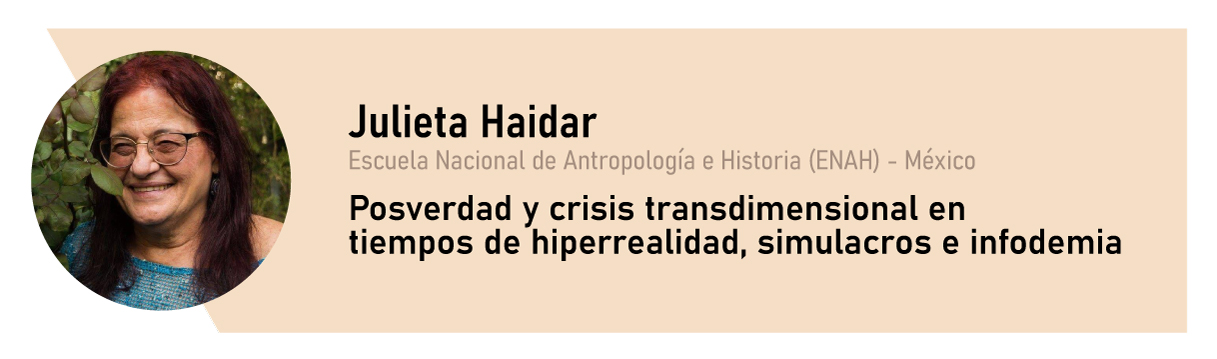
Full Professor and Senior Researcher at the National School of Anthropology and History (ENAH, Mexico), Graduate Division, Social Anthropology Program. She coordinates the Transdisciplinary Research Line "Discourse Analysis and Semiotics of Culture" as well as the Permanent Seminar on Discourse Analysis and Semiotics of Culture. She is also one of the pioneers in introducing the work of Yuri Lotman and the Semiotics of Culture in Mexico since the early 1980s.
Her academic contributions include the organization of and participation in numerous congresses, symposia, and colloquia related to the Language Sciences, Anthropological Sciences, and other fields, both nationally and internationally, engaging with six Vanguard Epistemologies: Complexity, Transdisciplinarity, Decoloniality, Epistemology of the South, Ancestral Epistemologies, and Revisited Materialist Epistemology.
Her scholarly production includes the development of the Transdisciplinary Model of Discourse Analysis and Semiotics of Culture, based on the Epistemologies of Complexity and Transdisciplinarity, developed since the late 1980s at the Graduate Division of the National School of Anthropology and History; as well as the editing and compilation of several collective volumes and anthologies, such as the ongoing Digital Collection on Complexity, Transdisciplinarity, Decoloniality, Semiotics, and Discourse Analysis. In addition, she has published four books: Discurso sindical y procesos de fetichización, INAH, Mexico, 1990; El Estructuralismo. Lévi-Strauss y la fascinación de la razón, Juan Pablo Editor, Mexico, 1990; El Debate CEU-Rectoría. Torbellino Pasional de los Argumentos, UNAM, Mexico, 2006; Fronteras Semióticas de la Emoción. Los procesos del sentido en las culturas, INAH/ENAH and UNAM, Mexico, 2019; as well as numerous book chapters and journal articles published in countries such as Mexico, Canada, Brazil, the Dominican Republic, Puerto Rico, Ecuador, Spain, Estonia, Italy, and England.
Dr. Julieta Haidar has received several fellowships, awards, and distinctions. She is also a member of various national and international academic associations and networks related to the Language Sciences, including Discourse Analysis, General Semiotics, Semiotics of Culture, Visual Semiotics, and Transdisciplinarity. She served as President of the Third World Congress of Transdisciplinarity, held virtually from October 2020 to October 2021.
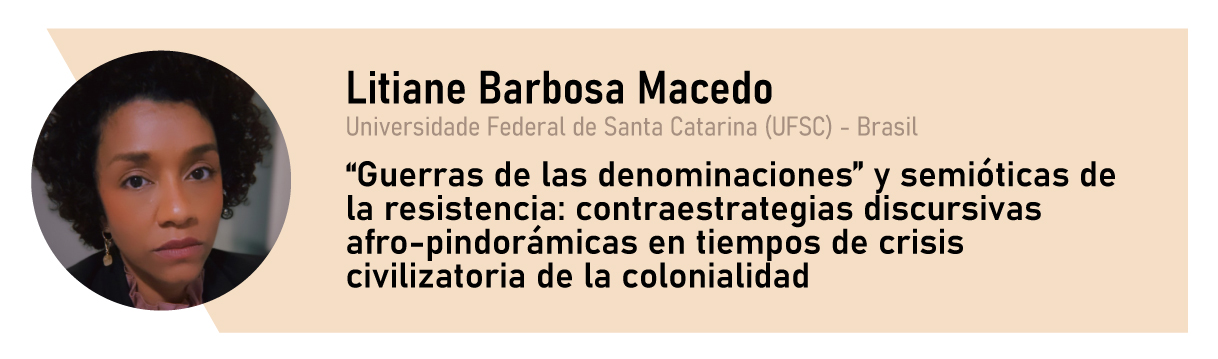
Holds a PhD and a Master's degree in Linguistic Studies from the Graduate Program in English at the Federal University of Santa Catarina (UFSC). She serves as a faculty member in the Department of Foreign Language and Literature at the Federal University of Santa Catarina (UFSC), Brazil, within the English Studies program.
Her academic work—marked by a strong commitment to language studies, particularly in the field of Critical Discourse Analysis in dialogue with Countercolonial, Decolonial, and Antiracist perspectives—focuses on the interfaces between discourse, power, and social inequalities. Her work brings together contributions from Systemic Functional Linguistics, Multimodality, Translation Studies, Afro-perspectivist approaches in the Social Sciences, and intersectional perspectives from Gender and Sexuality Studies, which have materialized in research projects, outreach initiatives, and pedagogical practices linked to critical, situated, and socially responsible education.
In the areas of research and outreach, she also coordinates projects that connect language, social justice, and antiracist education, with particular emphasis on initiatives focused on Critical Menstrual Literacy. Among these initiatives is the interinstitutional collaborative project MEInstruAÇÃO, which aims to promote menstrual dignity through discourse-critical pedagogical practices developed in dialogue with schools and communities, addressing stigmas, inequalities, and silences surrounding menstruation.
In her recent scholarly production, she has dedicated herself to the epistemological expansion of Critical Discourse Studies in Brazil through decolonial and Afro-perspectivist perspectives. These contributions are expressed in works such as "Blackening Critical Discourse Studies: Afro-perspectivist Epistemological Contributions to the Field of Critical Discourse Analysis in Brazil" and "Notes in Bold: Contributions of Afro-perspectivist Epistemes in the Face of Colonial Noise in Knowledge Production in the Field of Critical Discourse Studies," in which she challenges Eurocentric epistemes and affirms the centrality of Black knowledges in the production of knowledge. This reflection is also articulated in the chapter "Transdisciplinarity as a Sociopolitical Stance of Resistance and Re-existence," which defends transdisciplinarity as an ethical-political principle for the decolonization of academic practices.
Beyond her academic trajectory, Litiane Barbosa Macedo is the mother of Léo, whose existence inspires her daily and teaches her, day by day, to inhabit the world with greater tenderness, attentiveness, and balance. In university teaching and in the education of future teachers and language professionals, she has found a space of hope—drawing inspiration from bell hooks and Paulo Freire—in which teaching also means sharing dreams of social justice, cultivating pedagogical practices sensitive to difference, and reimagining, together with students, plural, critical, and solidaristic ways of being, learning, and resisting in the world.
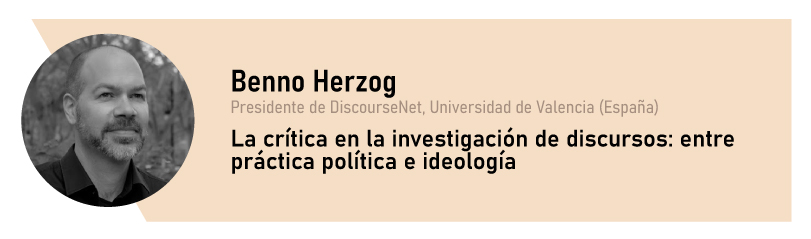
Full Professor at the University of Valencia (Spain), in the Department of Sociology and Social Anthropology, and Director of the University Institute for Creativity and Educational Innovations, as well as of the Research Group on Critical Theory at the University of Valencia.
His academic background includes numerous research stays at various international institutions, such as the Institute for Social Research in Frankfurt, the University of Warwick, and the Federal University of Paraíba. Among his scientific contributions are several funded research projects on discourse and racism (the RealUp Project – Hate Speech, Racism and Xenophobia: Alert Mechanisms and Response, Analysis of Upstander Speech, funded by the European Council), on decolonization (the Decolonizing Development project within the European Union's Horizon 2020 Framework Programme), and on authoritarianism (the project Constellations of Authoritarianism: Memory and the Present of a Threat to Democracy from a Philosophical and Interdisciplinary Perspective, funded by the Ministry of Innovation and Science). He has also recently participated in research projects on Contemporary representations of perpetrators of mass violence: concepts, narratives, and images (funded by the Ministry of Education, Industry, and Competitiveness), as well as in the ALRECO project Hate Speech, Racism and Xenophobia: Alert Mechanisms and Coordinated Response (funded by the European Union's Rights, Equality and Citizenship Work Programme).
He has authored more than 100 publications, including: Invisibility of Suffering. The Moral Grammar of Disrespect, London: Palgrave Macmillan, 2020; Análisis Sociológico del Discurso. Enfoques, métodos, procedimientos, Valencia: PUV, 2019; and Discourse Analysis as Social Critique. Discursive and Non-Discursive Realities in Critical Social Research, London: Palgrave Macmillan, 2016.
Benno Herzog is an active member of various international research networks in the social sciences and discourse studies and a Fulbright Fellow at Columbia University, New York. He currently serves as President of DiscourseNet, where he has fostered the consolidation of a transnational community dedicated to critical discourse analysis.
- 380 views